
5. The Lost Mansion of Abdullah Bey
Key Features:
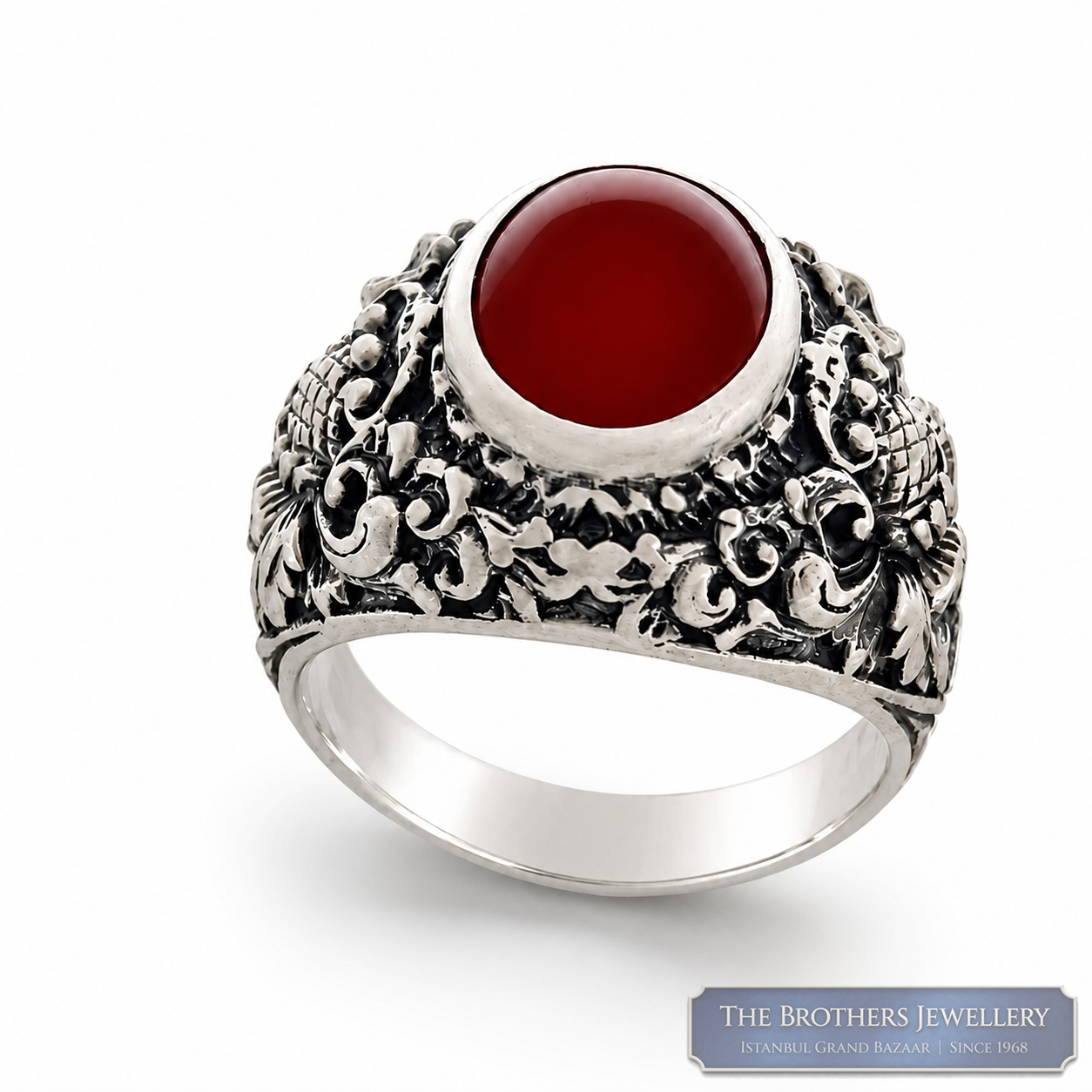
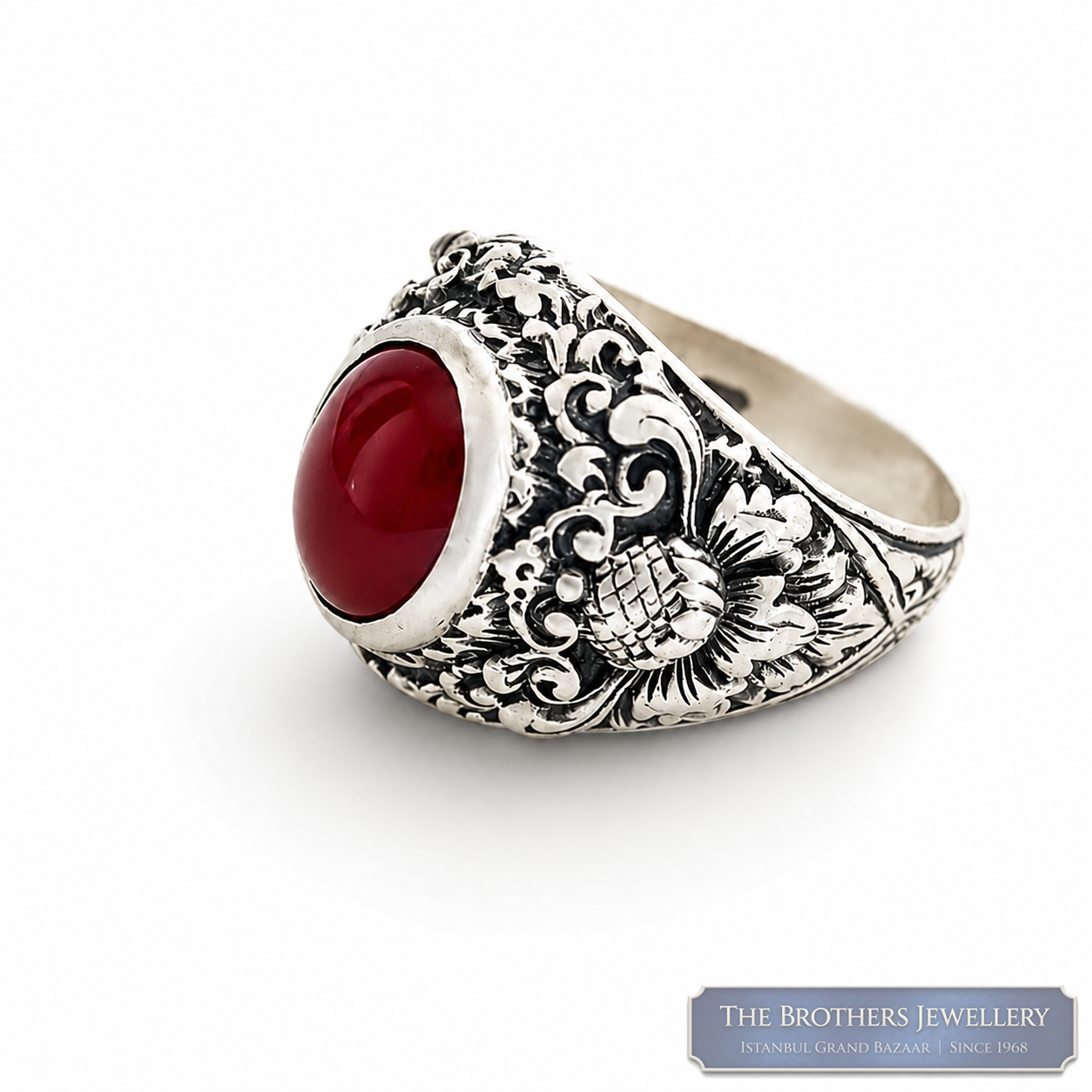
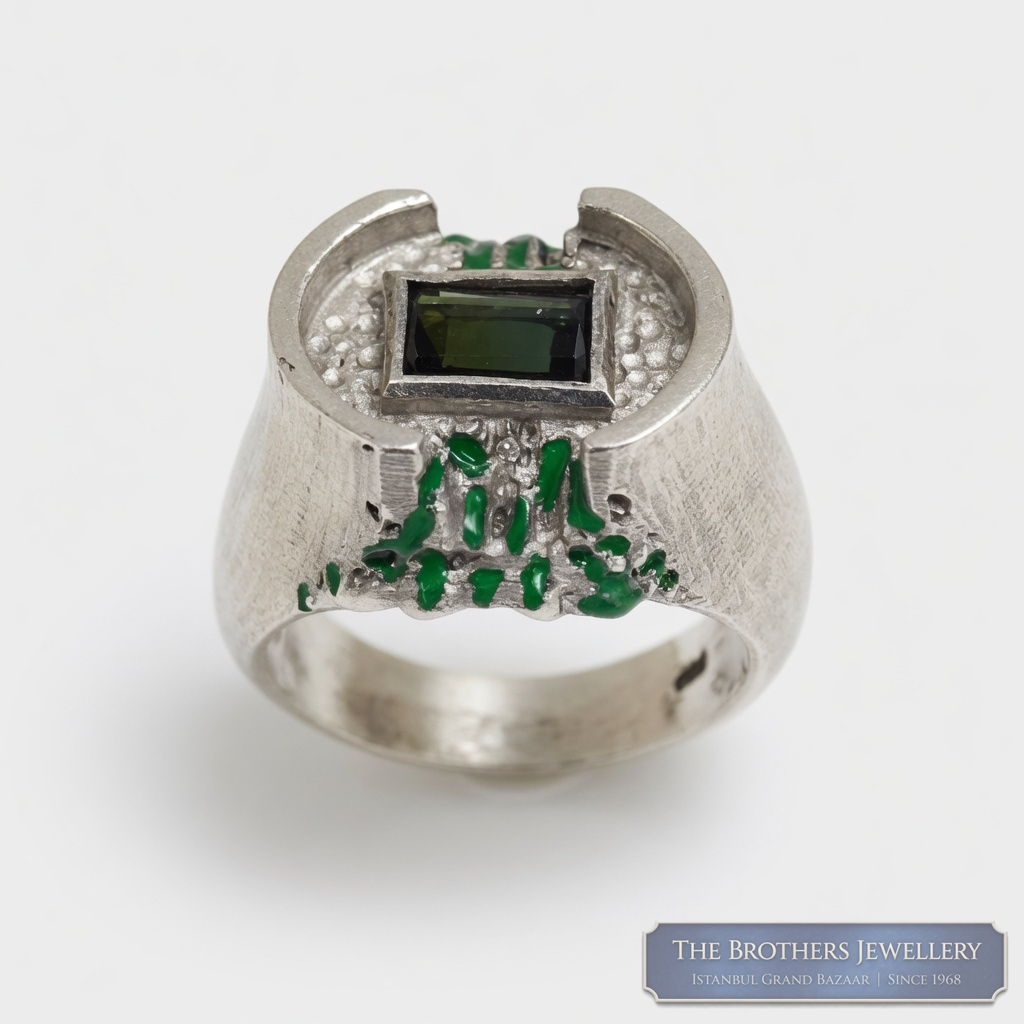
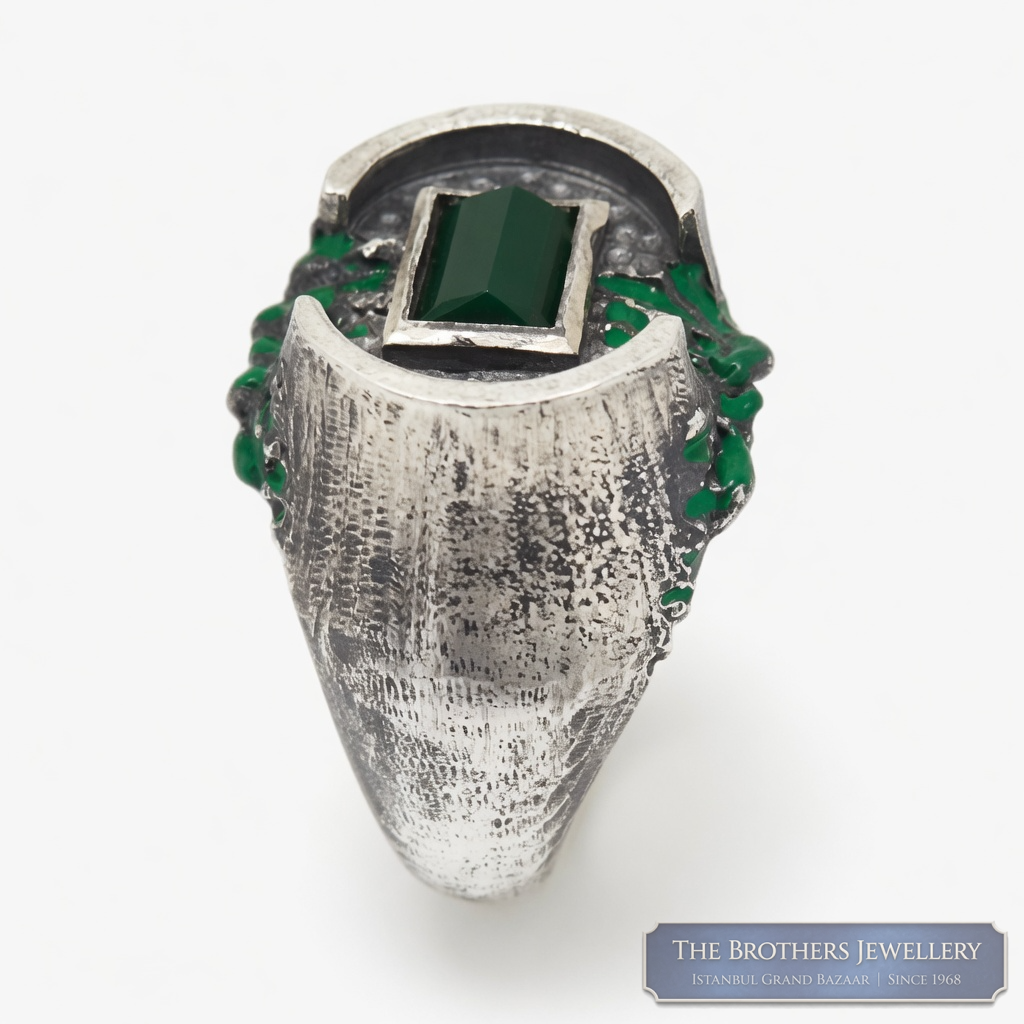
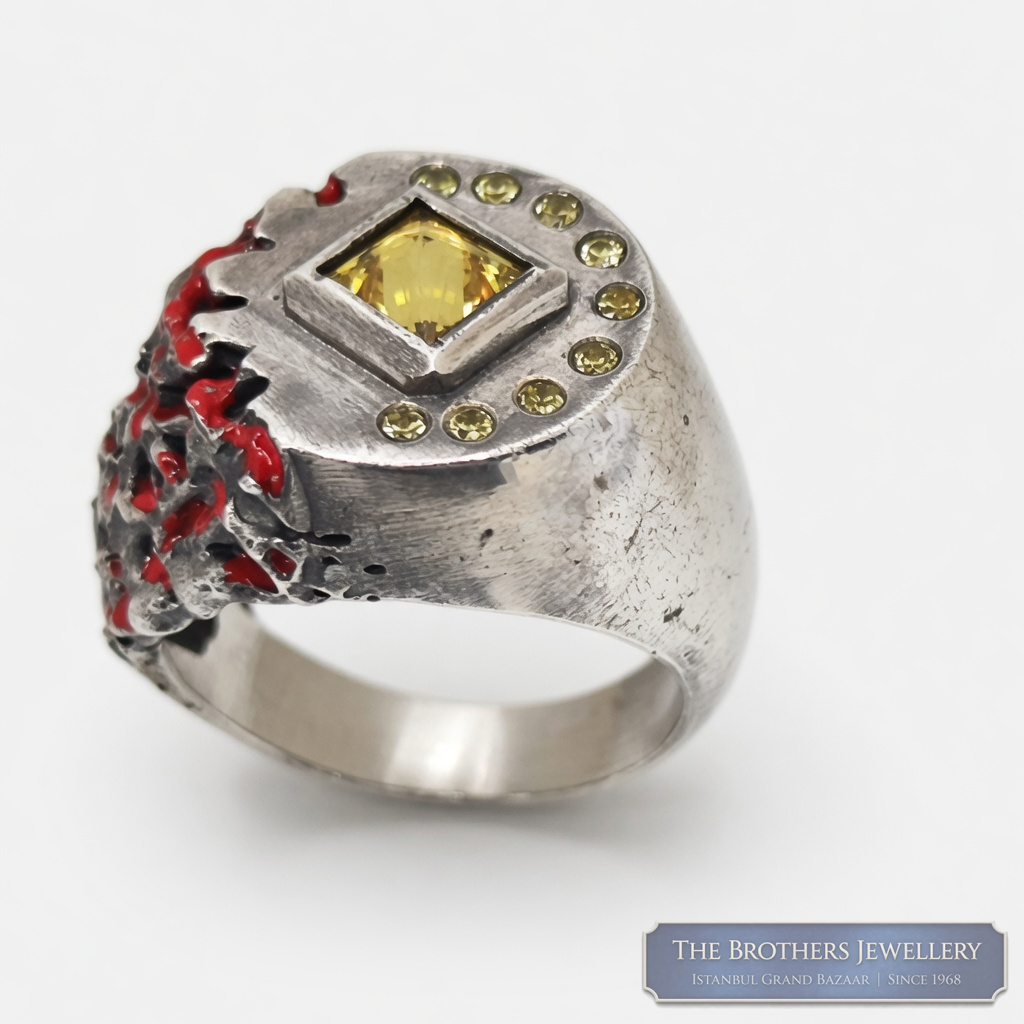
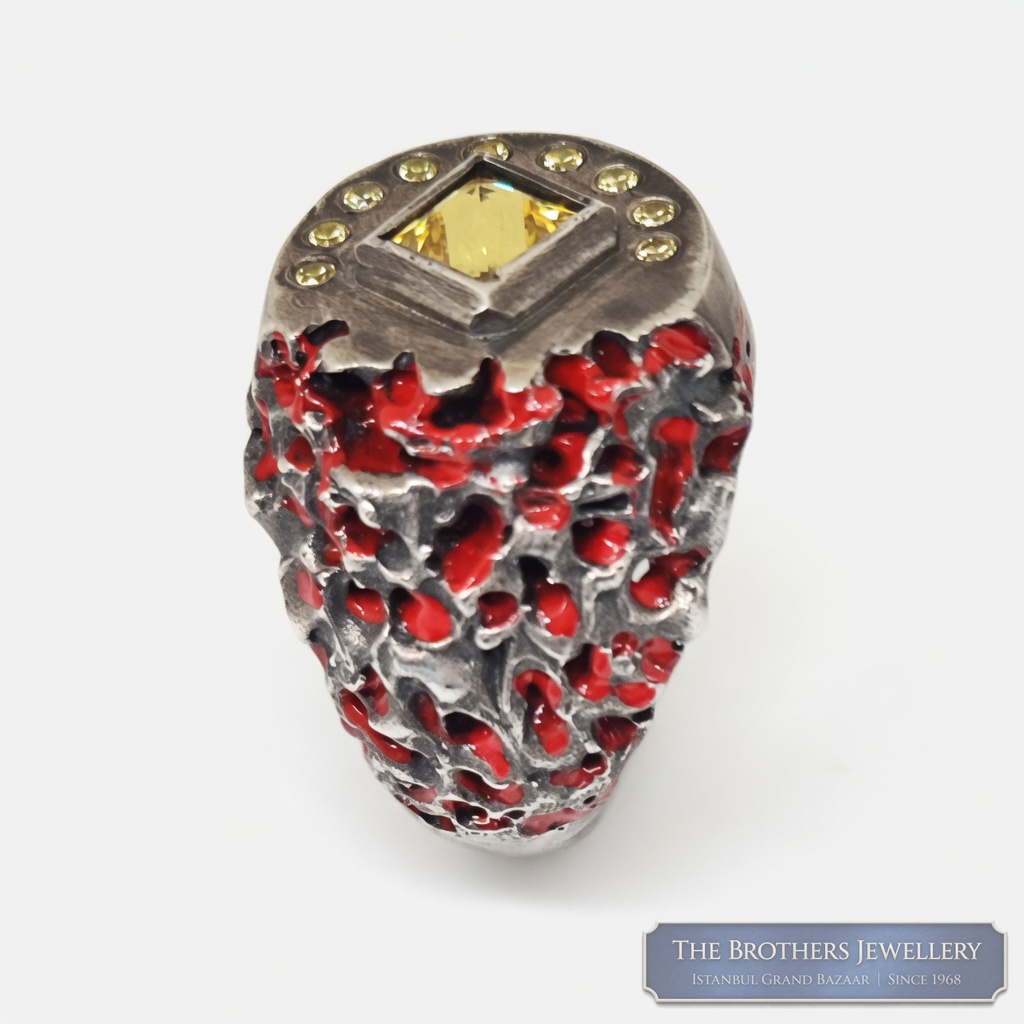
Handmade, original design.
Oxide polished, raw and characterful surface texture.
Special Agate stone
Oval cut stone
Weight (≈8.42 g)
Single production – each piece is unique.
A story from the Brothers Jewellery Archives…
Some objects are not sold in the Grand Bazaar.
It only changes hands temporarily.
There's an old saying among the veteran craftsmen working in the Grand Bazaar about this:
"Some pieces don't have an owner.".
It will only be the next carrier.”
This ring is one of them.
The story has been whispered for years within the walls of the Grand Bazaar, in the sections where the old stone boxes and Ottoman calligraphy are kept.
It all begins with a burning mansion on the Bosphorus.
In the late 19th century, during one of the most turbulent periods in the Ottoman Empire, there is said to have been a mysterious merchant named Abdullah Efendi who traded on the Egyptian route. He transported spices, precious stones, fabrics, and some private artifacts not recorded in official documents.
With the fortune he had acquired, he decided to have a unique mansion built on the Bosphorus.
But the architect is not an Ottoman, but a young man from France:
Étienne Vallois.
This architect, who worked with Neo-Baroque and Gothic details, became obsessed with the architecture of Istanbul after arriving in the city. For months, he studied ancient Byzantine ruins, Egyptian motifs, and Ottoman ornamentation.
Then he designs a mansion for Abdullah Efendi.
But the most important part of the mansion is not the building itself, but the entrance gate.
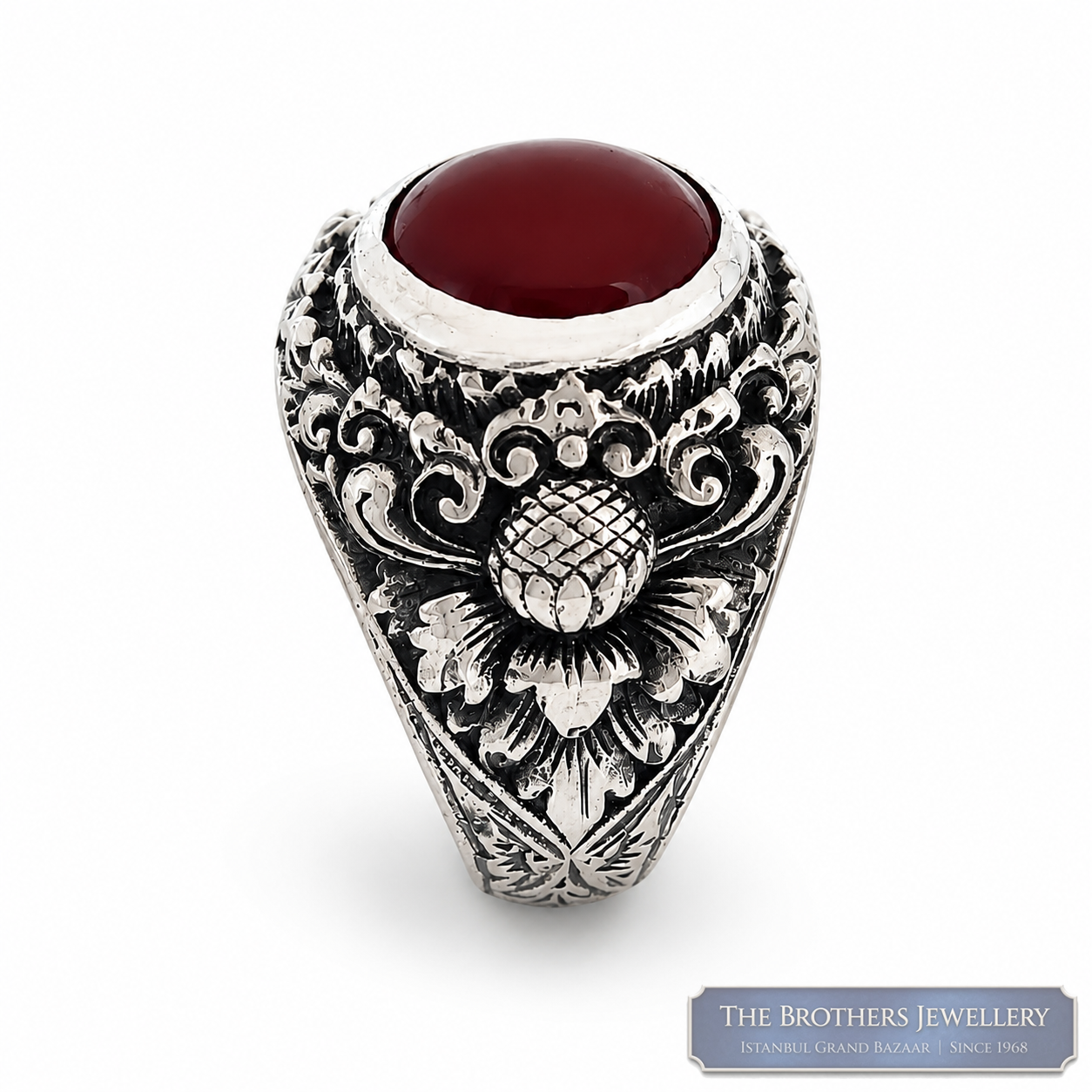
The motif now found on the ring is engraved right in the center of the door.
It's neither a complete coat of arms, nor an Ottoman motif, nor a European design.
The central form is, according to some, a pine cone.
According to some, it's the lotus of the Nile.
Some craftsmen say it is a "protective seal".
Some historians even claim that this symbol later inspired the motifs on the cover of the Encyclopedia Britannica.
The French architect's final words were remembered for years to come:
"Sometimes a house is held together not by its walls, but by its symbols."“
However, shortly after the mansion was completed, Abdullah Efendi's goods from Egypt disappeared in the Mediterranean Sea.
In official records:“sea pirates”" writer.
But nobody in the Grand Bazaar believes that.
Because a few weeks later, the mansion burns down in the middle of the night.
The strange thing is this:
The fire destroys the entire interior.
But the entrance gate and the symbol on it remain undamaged.
Abdullah Efendi disappeared after that night.
Some say he fled to France.
Some were killed.
The truth can never be learned.
Years later, his son, who grew up in Paris, returns to Istanbul.
He has only three things with him: a burnt piece of a drawing, an old key, and a sentence his father constantly repeated:
"Don't forget the image of the house."“
In 1928, he went to a young craftsman in the Grand Bazaar.
He pulls an old drawing from his pocket and says he wants to have the same motif engraved on a ring.
The master looks at the drawing for a long time.
Then he quietly gives this answer:
"This is not an ornament.".
This is a reminder.”
And the ring is made.
From that day on, the ring disappeared and reappeared over the years, changing collections along the way.
But here's what's interesting:
Wherever the ring is mentioned, stories of old Istanbul somehow emerge.
Lost buildings, burned mansions, erased families, forgotten coats of arms…
The Abdullah Bey Seal is seen not just as a ring, but as a symbol of a lost memory of Istanbul.
The central form of the motif is interpreted by some artists as a cocoon, by others as a Nile lotus, and by still others as a protective seal. It is said to represent power, transformation, and hidden memory.
The ring's ornamentation blends Baroque and Rococo influences from the late Ottoman period with Neo-classical lines from Europe, much like Istanbul of that era.
A trace of an era where East and West merged in a single silhouette.
Therefore, the Abdullah Bey Seal is not merely an aesthetic object; it is seen as a silent reminder for those who do not forget their roots, their past, and the memory they carry.
Some consider this motif one of the last vestiges of the vanished Bosphorus aristocracy.
Some believe it symbolizes a suppressed era, a forgotten culture, and erased stories of Istanbul.
And some customers say the same thing when they first see the ring:
> "Strange..."
"I feel like I've seen this somewhere before."”
The Brothers Jewellery didn't just reproduce this ring.
He brought it back to the surface.
Because he believes that preserving a forgotten culture, a lost memory, and the suppressed stories of the past is not a commercial responsibility, but a moral one.
| Body |
6 ,7 ,8 ,9 ,10 ,11 ,12 ,13 ,14 ,15 ,16 ,17 ,18 ,19 ,20 ,21 ,22 ,23 ,24 ,25 ,26 ,27 ,28 ,29 ,30 ,31 ,32 ,33 ,34 ,35 ,36 |
|---|---|
| Product Position |
Mat Brose ,Brose Oxide ,Oxide Polished ,Glossy Polished |
Most of the products are available in sizes 14-20 and can fit different finger sizes. You can contact us via WhatsApp for more detailed information.
Items in stock are shipped within 3 business days. Custom-made items or items not in stock may take up to 10 business days to ship.
Reviews
There are no reviews yet.